What Is a Peer-to-Peer Network & How Does It Work?
Peer-to-peer (P2P) refers to a type of network where participants (called “peers”) interact directly with one another without relying on a central authority or intermediary. In a P2P network, every peer can act as both a client and a server — sending, receiving, and storing data independently. In the context of cryptocurrencies and blockchain, P2P is a core principle. It allows users to exchange digital assets like Bitcoin or Ethereum directly, without needing a bank, payment processor, or centralized exchange to process the transaction.
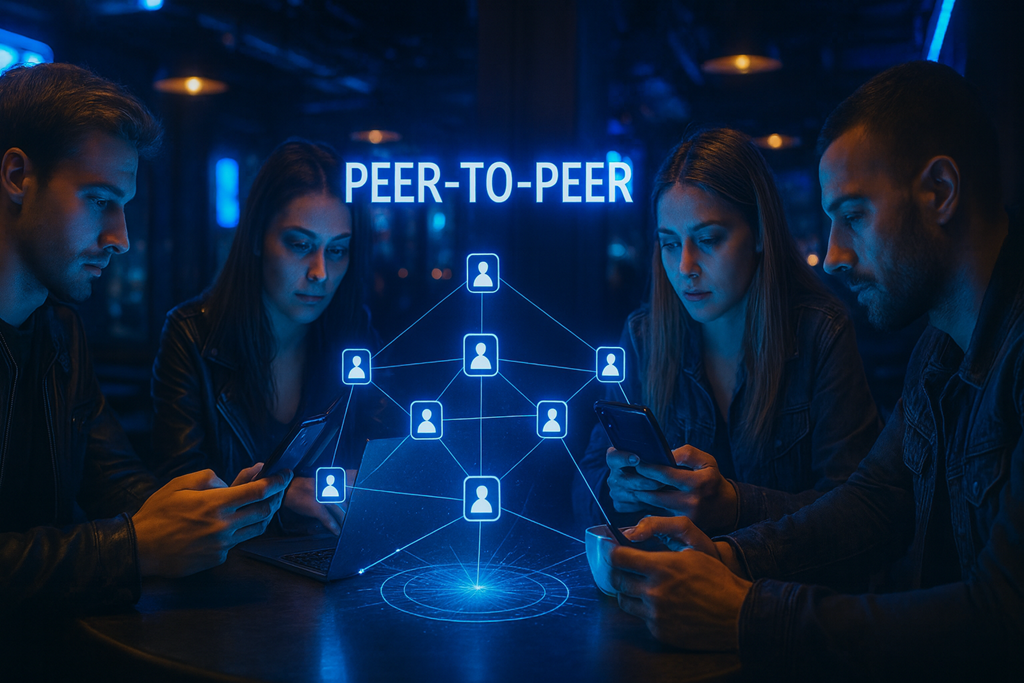
How Does P2P Work?
In traditional systems (like banks or PayPal), transactions go through a central server that manages the process. With P2P:
- You connect directly to the person you’re transacting with
- Both parties agree on the terms
- The transaction is recorded and validated by the network (usually blockchain-based)
- No central party controls the funds or holds your data
This model improves efficiency, reduces fees, and enhances privacy.
Real-World Examples of P2P
- Cryptocurrency transfers:
Sending Bitcoin directly from one wallet to another - P2P exchanges:
Platforms like LocalBitcoins or Binance P2P, where users trade directly with each other - File sharing:
Services like BitTorrent use P2P to distribute files - Messaging apps:
Some secure messengers use P2P networks for data privacy
In all these cases, the goal is to eliminate central control, increase resilience, and allow participants to interact freely.
Benefits of Peer-to-Peer Networks
- Decentralization – No single point of failure or control
- Lower fees – No middlemen taking a cut
- Global access – Anyone with an internet connection can participate
- Privacy and control – You own your data and funds
P2P in Crypto and Web3
Most blockchain networks are built as peer-to-peer systems, where thousands of computers (nodes) maintain the network together. These nodes validate transactions, store data, and secure the chain without needing central servers.
Decentralized apps (dApps), decentralized finance (DeFi), and even decentralized storage (like IPFS) rely on P2P architecture to function.
Final Thoughts
Peer-to-peer isn’t just a tech term — it’s a foundational idea behind cryptocurrency and decentralization. It gives people more freedom, privacy, and control over how they exchange value and information. In the world of crypto, P2P means you don’t have to ask permission to participate — you just connect and act.